Dune Crane

Ravish Kumar
| 27-02-2026
 · Animal Team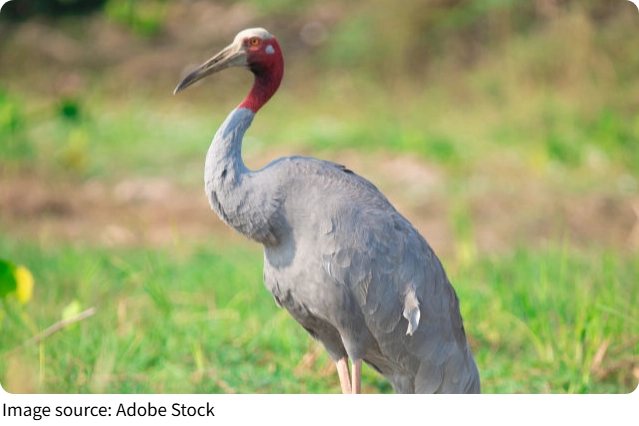
Watching a dune crane glide across sandy plains is like seeing a sculpture come to life.
Their tall, elegant frames and long, slender legs make them appear almost otherworldly, yet these birds are full of fascinating quirks that many people overlook.
Understanding the dune crane's behaviors and adaptations can deepen your appreciation for these desert specialists.
Remarkable Adaptations to Arid Landscapes
Dune cranes thrive in harsh desert environments where water and shelter are scarce. Their survival depends on clever adaptations that most casual observers might miss.
1. Efficient water use
These cranes can survive on minimal water, often getting most of their hydration from the plants and small animals they consume. For example, they feed on succulent plants that store water, allowing them to endure days without a direct water source.
2. Heat management
Dune cranes regulate their body temperature by stretching their wings and shading their legs. Observing them in the midday sun, you'll notice them adjusting their posture to reduce heat absorption, a subtle but effective survival strategy.
3. Foot adaptations
Their feet are specially designed for walking on soft sand. Wide toes prevent sinking, and strong tendons provide stability across shifting dunes. Watching them move, you can see how each step distributes weight to avoid getting stuck.
Unique Social Behavior
Dune cranes are social birds, often forming tight-knit groups that rely on cooperation for survival.
1. Communal roosting
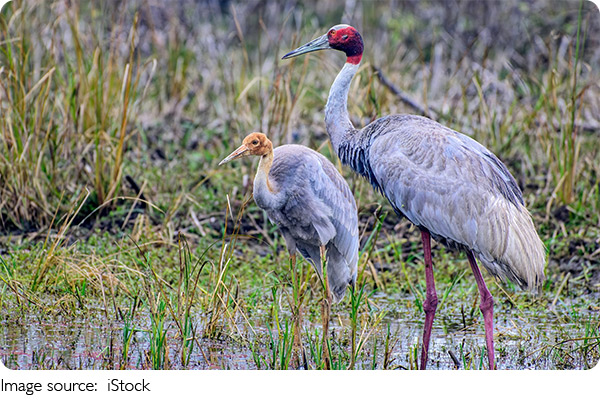
At dusk, groups of dune cranes gather in small clusters, sharing warmth and watching for predators. You might notice that older, more experienced birds take the outer positions, protecting the younger members inside the group.
2. Coordinated foraging
These cranes often forage together, spreading out in a loose line to cover more ground. Each bird communicates through subtle calls to signal food sources or threats, demonstrating a sophisticated level of social coordination rarely seen in desert birds.
3. Mating dances
One of the most captivating sights is their elaborate courtship display. Male dune cranes perform intricate dances, leaping and bowing while calling to attract females. Observing this display, you'll see the combination of strength, balance, and timing required to impress a mate.
Diverse Diet and Feeding Techniques
Dune cranes are opportunistic feeders, which helps them survive in resource-limited environments.
1. Plant matter
They consume seeds, fruits, and desert plants, which provide both energy and hydration. Watching them peck and dig through sand reveals a patient, methodical approach to finding food in a sparse landscape.
2. Small animals
Insects, small reptiles, and rodents supplement their diet. Dune cranes use a stalking technique, moving slowly and carefully before striking, showing impressive precision for a bird of their size.
3. Adaptive feeding strategies
During droughts, they can shift their diet to include more insects and seeds, demonstrating remarkable flexibility. For example, they might scratch the soil to uncover buried seeds that other animals would miss.
Migration and Seasonal Movement
Dune cranes are partial migrants, moving seasonally to find food and water.
1. Short-distance migration
Unlike long-distance migrators, dune cranes often travel only a few dozen miles, moving from harsher dunes to areas with more vegetation. Tracking these patterns helps researchers understand desert ecosystem health.
2. Timing with rainfall
Their movements are often tied to seasonal rains. Following the bloom of desert plants ensures access to seeds and insects, highlighting their intricate connection to environmental cues.
3. Energy-efficient travel
Dune cranes fly in loose formations to conserve energy, alternating lead positions. Watching a flock in flight, you'll notice the effortless glide that allows them to cover ground without expending excessive energy.
Conservation and Human Interaction
Though well-adapted, dune cranes face challenges from habitat loss and climate change.
1. Habitat preservation
Protecting key dune areas is critical for maintaining their populations. For example, sand dunes with native vegetation provide both food and nesting grounds.
2. Minimal human disturbance
Dune cranes are sensitive to human activity. Observing them from a distance ensures they continue natural behaviors without stress. Birdwatchers often use binoculars to maintain this respectful distance.
3. Community awareness
Local communities can help by monitoring populations and avoiding disruptive activities. Citizen science programs often invite volunteers to record sightings, contributing to research and conservation efforts.
The dune crane is far more than a striking figure in the desert. Its clever adaptations, social behaviors, and survival skills make it a marvel of evolution. Observing these birds closely reveals a world of strategies and interactions that are as intricate as they are elegant. Next time you spot a dune crane gliding across sand dunes, you'll see a creature perfectly tuned to its environment, a testament to the resilience and beauty of desert wildlife.